How New Alloys Are Transforming the Casting Foundry Industry
Wiki Article
Discover the Innovations and Techniques worldwide of Casting Foundry
The Casting Foundry market is undertaking significant change. Advanced products and innovative methods are redefining conventional methods. Automation and robotics are simplifying operations, while lasting methods are becoming important. New mold and mildew styles and additive manufacturing are using extraordinary possibilities. Quality assurance procedures are additionally advancing, making sure integrity in production. As these patterns continue to form the future of casting, one have to consider how they will influence the industry all at once.The Duty of Advanced Materials in Casting
Advanced products play a necessary role in improving the efficiency and high quality of casting processes. They add to boosted thermal stability, lowered contraction, and increased sturdiness of actors items. Advancements such as advanced porcelains and composite materials supply higher resistance to thermal and mechanical stresses, enabling the manufacturing of complex styles with exceptional surface area coatings. These materials additionally help with much better mold and mildew and core production, causing minimized problems and enhanced dimensional accuracy.The usage of alloys with tailored residential properties enables for maximized efficiency in certain applications, such as aerospace and vehicle sectors. As shops adopt innovative products, they can attain higher energy effectiveness and reduced waste generation, lining up with sustainability goals. The integration of these products not only streamlines manufacturing but also enhances the total competitiveness of Foundry procedures in a swiftly evolving market, marking a critical shift in conventional Casting techniques.
Automation and Robotics in Foundry Operations
Automation and robotics are transforming Foundry procedures by improving effectiveness and precision. These modern technologies improve molding procedures, decreasing labor expenses and lessening human error. Consequently, producers are progressively embracing automated systems to enhance manufacturing capacities and meet increasing demand.Benefits of Automation
The integration of automation and robotics into Foundry procedures has actually transformed typical production methods, producing substantial benefits. Enhanced performance ranks among the main benefits, as automated systems operate continually, decreasing cycle times and increasing outcome. In addition, automation boosts precision and uniformity in casting procedures, lessening problems and guaranteeing higher top quality products.Price savings additionally arise from lowered labor prices and lower material waste, permitting a lot more reliable resource utilization. Safety and security is one more important advantage; automation minimizes the danger of human injury by handling unsafe jobs. Additionally, real-time surveillance capabilities enable better information collection and analysis, helping with informed decision-making. Overall, the adoption of automation and robotics substantially enhances functional performance, resulting in enhanced competition in the Foundry industry.
Robotics in Molding Procedures
How can robotics improve molding procedures in foundries? Robotics substantially improves efficiency and accuracy in molding operations. Automated systems can take care of repeated jobs, such as positioning patterns and pouring liquified metal, minimizing the risk of human mistake and making sure constant quality. In addition, robotic arms equipped with advanced sensing units help with intricate mold and mildew styles, enabling for complex geometries that conventional techniques struggle to accomplish.Robotics can run in hazardous environments, decreasing the requirement for human intervention in dangerous tasks. This not only boosts worker safety and security yet likewise enhances production prices. By incorporating robotics into molding procedures, foundries can attain higher throughput, decreased cycle times, and lower operational costs, positioning themselves competitively in an advancing sector landscape.
Lasting Practices in Casting Foundries
As the demand for eco liable production rises, casting factories are embracing sustainable methods to minimize their eco-friendly footprint. Several foundries are executing reusing programs for steel scrap, decreasing waste and conserving resources. By recycling materials, they can notably decrease the raw product intake that adds to environmental destruction.Additionally, energy-efficient procedures are being integrated right into operations. Shops are purchasing sustainable energy sources, such as solar or wind power, to lower dependence on nonrenewable fuel sources. This change not only reduces greenhouse gas exhausts but also improves price financial savings over time.
/zac89290_5050.jpg)
Innovations in Mold And Mildew Design and Construction
Current improvements in 3D printing innovation are reinventing mold design and manufacture in the Casting Foundry sector. In addition, the introduction of lasting materials is enhancing the ecological footprint of production procedures. Precision mold design techniques better add to boosted performance and precision in the manufacturing of facility components.3D Printing Technology Breakthroughs
Although standard mold style and manufacture methods have actually offered the Foundry market for years, improvements in 3D printing modern technology are transforming these procedures. By enabling the production of extremely intricate geometries, 3D printing enables more detailed layouts that were previously impossible or cost-prohibitive. This modern technology reduces preparations substantially, as mold and mildews and prototypes can be created in an issue of hours rather than weeks (Casting Foundry). Furthermore, 3D printing helps with quick iteration, enabling designers to examine and change layouts promptly based upon feedback. The capacity to generate molds utilizing different materials improves versatility and makes it possible for tailored solutions for specific Casting applications. 3D printing modern technology is reshaping the landscape of mold design and manufacture in the Casting Foundry market.Lasting Product Innovations
The change toward sustainable methods in the Casting Foundry industry is acquiring momentum, with technologies in product option playing an essential role. Foundries are progressively adopting green products, such as recycled steels and bio-based materials, to minimize ecological influence. These lasting materials not only minimize waste yet additionally improve the total effectiveness of the Casting procedure. Developments in mold and mildew design, such as the usage of 3D printing innovation for producing mold and mildews with much less material, further add to sustainability efforts. Additionally, innovations in finishing innovations enable for decreased exhausts during casting procedures. By focusing on sustainable material advancements, the Casting Foundry sector is moving towards a more accountable future, straightening production practices with environmental stewardship and resource preservation.Precision Mold Engineering Techniques
As innovations in innovation remain to improve the Casting Foundry market, precision mold and mildew design methods are arising as critical parts in enhancing manufacturing quality and effectiveness. These cutting-edge methods leverage computer-aided design (CAD) and computer mathematical control (CNC) machining to develop mold and mildews with outstanding precision. Strategies such redirected here as additive manufacturing permit complex geometries that standard methods can not accomplish, markedly decreasing preparations and material waste. Additionally, the assimilation of simulation software assists in predicting mold habits throughout casting, allowing the optimization of designs prior to physical production. This aggressive strategy not just enhances the total return however likewise guarantees that mold and mildews can be customized to satisfy details application requirements, paving the way for even more advanced and flexible Casting services.Additive Manufacturing: A Game Changer for Casting
While conventional Casting approaches have actually long been the foundation of production, additive production is rapidly transforming the landscape of casting foundries. This cutting-edge strategy, often referred to as 3D printing, permits for the production of complicated geometries that were previously unattainable with standard approaches. By utilizing digital layouts, factories can produce mold and mildews and cores with precision and rate, substantially lowering lead times and product waste.Additive manufacturing also helps with the manufacturing of personalized components, allowing producers to react promptly to certain client demands, thus boosting competitiveness. In addition, the assimilation of additive procedures into Foundry procedures can enhance operations, enhancing total performance. As the market accepts these improvements, it is poised to redefine the future of spreading, offering brand-new chances for creative thinking and versatility. As a result, additive manufacturing stands as a critical growth, reshaping exactly how shops approach style and manufacturing in a rapidly evolving market.
High Quality Control Techniques in Modern Foundries
Quality assurance strategies in modern-day foundries are important for guaranteeing that actors products meet rigid sector requirements and client requirements. These strategies include a selection of techniques, consisting of statistical procedure control (copyright), which checks production procedures to identify and remove variability. Non-destructive testing (NDT) methods, such as ultrasonic testing and X-ray inspection, are utilized to spot interior problems without harming the item. In addition, the execution of automated inspection systems enhances both precision and performance, permitting real-time high quality evaluations. Material traceability is one more essential component, ensuring that each batch of raw materials can be tracked throughout the production process. Furthermore, contemporary factories progressively use computer-aided style (CAD) and simulation software to forecast prospective flaws before spreading, facilitating positive quality administration. By integrating these innovative quality assurance methods, shops can considerably decrease waste, improve item reliability, and keep competitive benefit out there.The Future of Casting: Predictions and patterns
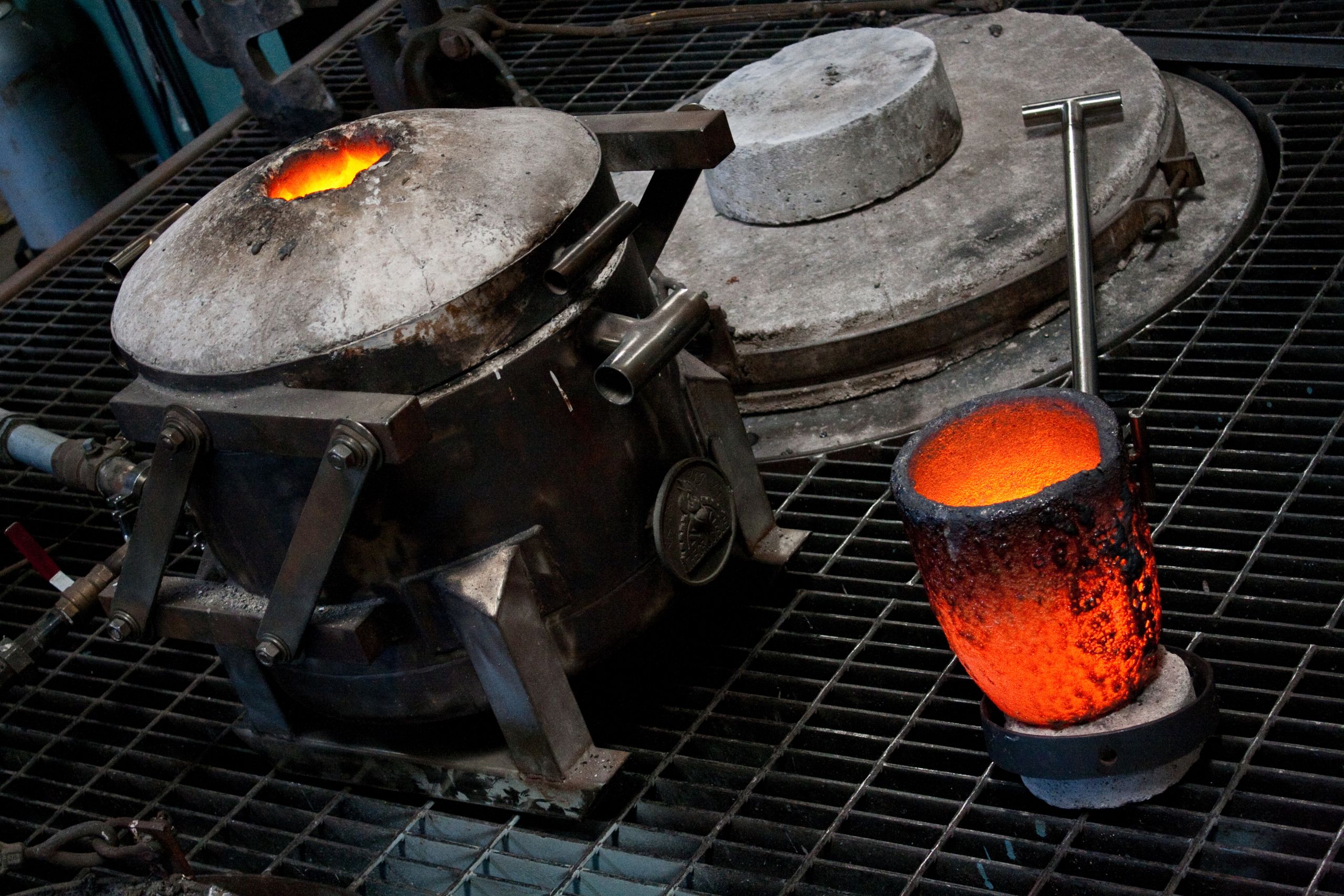
In addition, the trend toward lasting methods is gaining momentum, with foundries progressively embracing eco-friendly materials and processes. This shift not only addresses ecological problems yet additionally straightens with customer demand for greener items.
In addition, the surge of additive production is expected to revolutionize conventional Casting techniques, allowing for more intricate layouts and lowered material waste.
As these fads materialize, the Casting industry is likely to experience substantial shifts in manufacturing strategies, market needs, and workforce requirements. Companies that welcome these More Bonuses changes will be well-positioned to grow in an increasingly competitive landscape.
Frequently Asked Concerns
What Are the Common Kinds Of Casting Processes Made Use Of Today?
The usual sorts of casting processes utilized today include sand casting, investment casting, pass away spreading, and centrifugal casting. Each method differs in application, material, and intricacy, dealing with varied industrial and production requirements.Just How Does Casting Compare to Other Manufacturing Approaches?
Casting, contrasted to other making methods, supplies advantages like intricate form development and product efficiency. It might include much longer lead times and greater initial prices, making it much less ideal for fast production compared to approaches like machining.What Industries Primarily Count On Casting Foundries?
Industries such as automotive, machinery, building and construction, and aerospace greatly depend on casting foundries. These markets use casting for creating complicated steel elements, making sure durability and accuracy in their products, which are crucial for functional effectiveness.here
What Are the Typical Precaution in Casting Foundries?
Common precaution in casting shops include individual protective tools, appropriate air flow, routine equipment maintenance, safety training, and emergency situation reaction protocols. These methods help lessen threats connected with high temperature levels, harmful products, and hefty machinery procedures.
Just How Can I Beginning an Occupation in Casting Foundry Operations?
To begin a job in casting Foundry operations, one need to seek appropriate education and learning, seek apprenticeships, gain hands-on experience, and acquaint themselves with safety and security procedures and equipment used in the Foundry industry to improve employability.Recent improvements in 3D printing technology are reinventing mold and mildew design and construction in the Casting Foundry market. The change toward lasting methods in the Casting Foundry industry is gaining momentum, with innovations in material choice playing an essential duty. As developments in modern technology continue to reshape the Casting Foundry market, accuracy mold engineering techniques are arising as essential elements in boosting production high quality and performance. While standard Casting methods have long been the backbone of manufacturing, additive production is rapidly changing the landscape of casting shops. Contemporary shops significantly make use of computer-aided layout (CAD) and simulation software application to forecast possible flaws prior to spreading, assisting in proactive top quality management.
Report this wiki page